



by Travis Loller, Kim Chandler, Jeffrey Collins and Davis A. Lieb
NASHVILLE, Tenn. — Amid raucous protests Thursday, Republicans in Tennessee enacted a new U.S. House map that carves up a majority-Black district in Memphis, reshaping it to the GOP’s advantage as part of President Donald Trump’s strategy to hold on to a slim majority in the November midterm elections.
The final Senate vote unfolded as demonstrators chanted loudly in the galleries and hallways. Democratic state Sen. Charlane Oliver stood on her desk in the Senate chamber, holding a banner denouncing the redistricting as a “Jim Crow” effort, then clapping and dancing. Other Democratic senators linked arms in the front of the chamber. Republican leadership quickly adjourned the special session, sending the new map on to Republican Gov. Bill Lee, who promptly signed it into law.
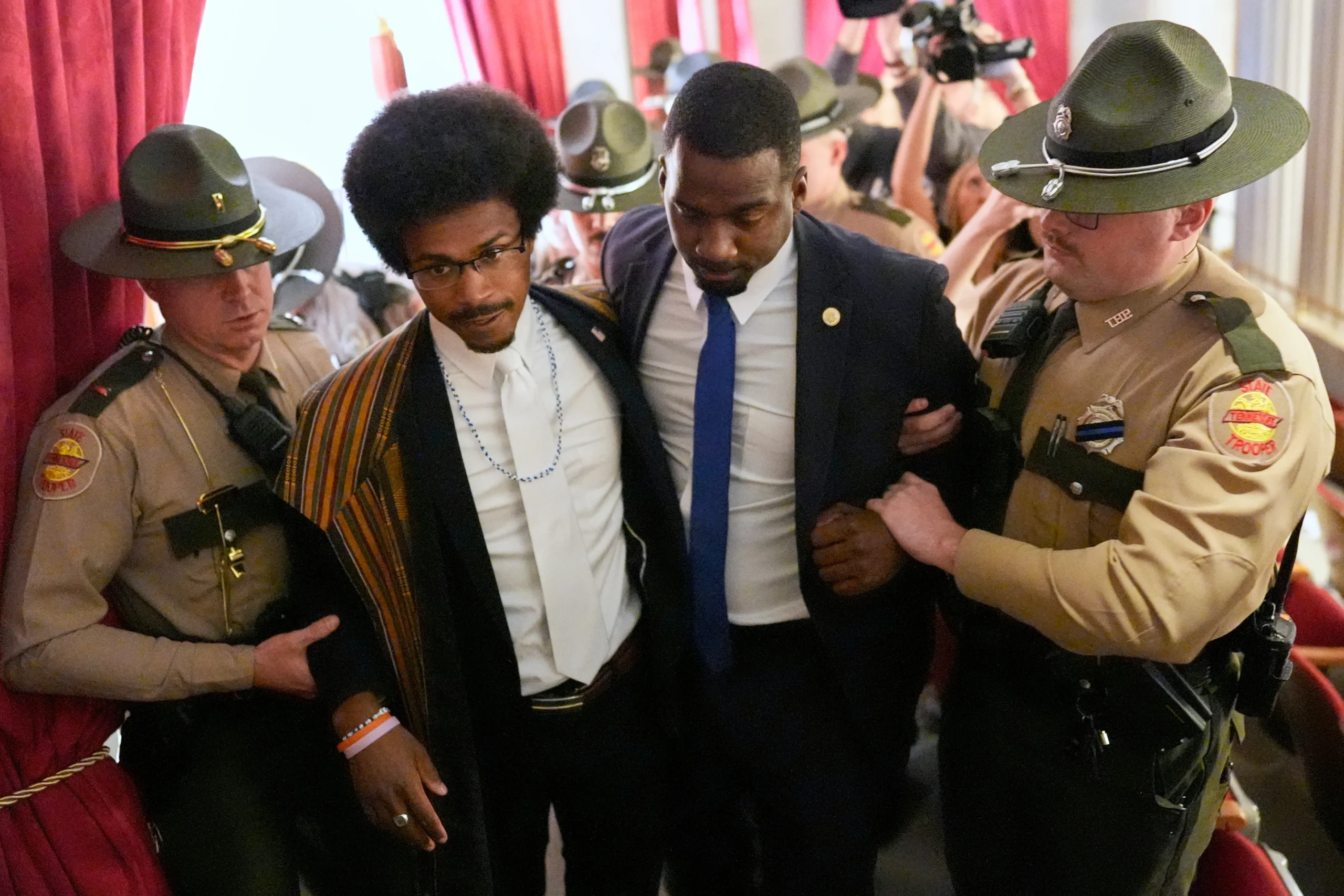
Protesters in the galleries also had disrupted the Republican-led House as it voted for the new map — yelling, chanting and blowing air horns. In the hallways, other shouting protesters were held back by Tennessee state troopers.
Not long after the new map became law, the NAACP Tennessee State Conference sued in state court asserting that the mid-decade redistricting is illegal.Tennessee is the first state to pass new congressional districts since a U.S. Supreme Court ruling last week significantly weakened federal Voting Rights Act protections for minorities. But more Southern states could follow. Republicans in Louisiana, Alabama and South Carolina also have taken steps toward redistricting.
The Supreme Court ruled that Louisiana relied too heavily on race when creating a second Black-majority House district as it attempted to comply with federal law. The high court’s decision altered a decades-old understanding of the law, giving Republicans grounds to try to eliminate majority-Black districts that have elected Democrats.
Louisiana has postponed its congressional primary to give state lawmakers time to craft a new House map. Legislation awaiting a final vote Friday in Alabama also would upend the state’s congressional primaries if courts allow changes to its U.S. House districts. In South Carolina, meanwhile, Republican state House members released a proposed new congressional map designed to give them a clean sweep of the seats.
The states are the latest to join an already fierce national redistricting battle. Tennessee is the ninth state to redraw its congressional districts since Trump prodded Texas Republicans to do so last year. From that spate of redistricting, Republicans think they could gain as many as 14 seats while Democrats think they could gain up to 10. But some competitive races mean the parties may not get everything they sought in the November elections.
