



by Joseph Omoremi
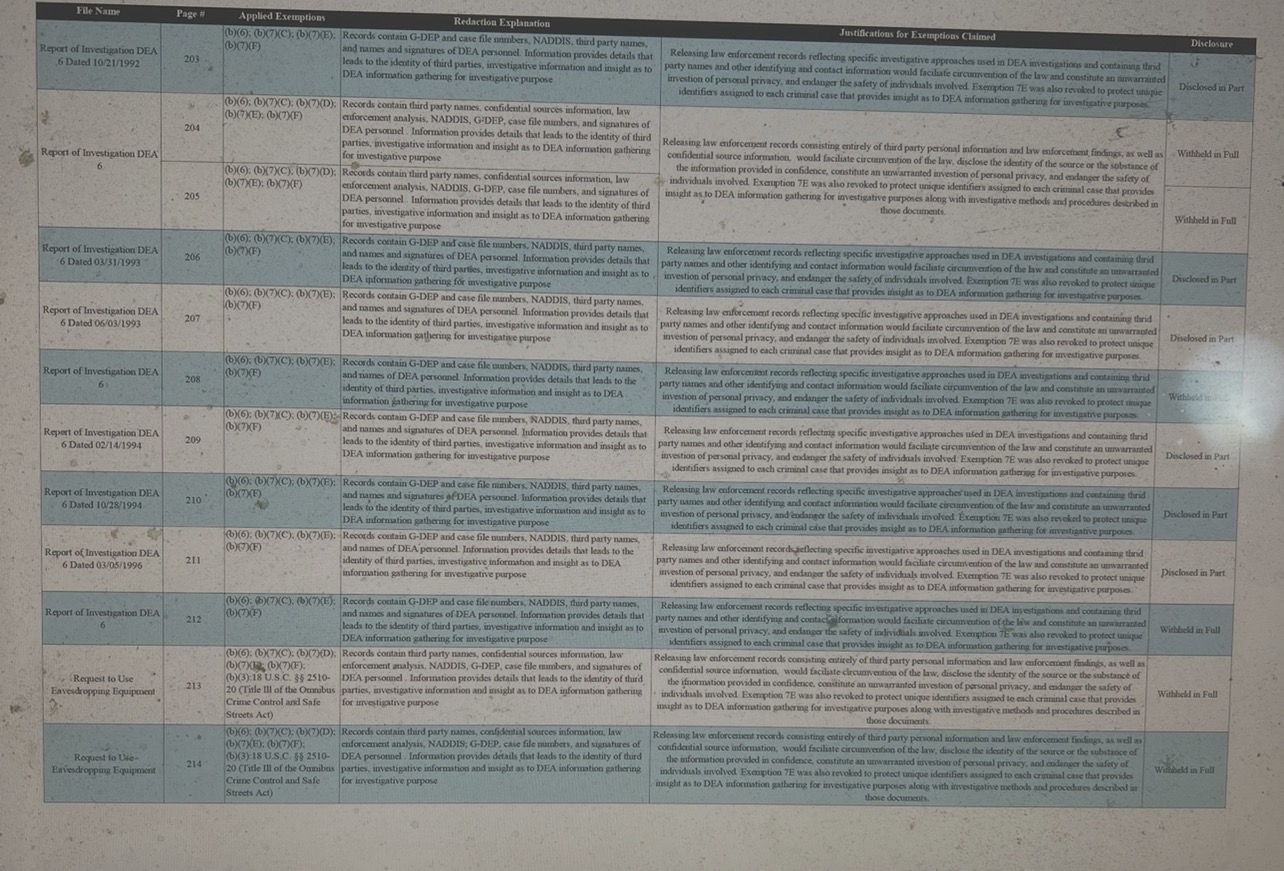
CHICAGO, IL -A deliberate attempt to prevent the disclosures of secret informers, eaves dropping equipment and identity of Drug Enforcement Administration (DEA)’s officers among other things were listed as reasons why the criminal investigations of President Bola Tinubu of Nigeria between 1990 and 1993 were either withheld in full, redacted or partially disclosed.
“Releasing law enforcement records consisting entirely of third-party personal information and law enforcement findings, as well as confidential source of information, would facilitate circumvention of the law, disclose the identity of the source or the substance of the information provided in confidence,” said the DEA in a 17-page index reports filed with the US-District Court in Washinton DC.
It would also “constitute an unwarranted invasion of personal privacy and endanger the safety of individuals involved” which is protected by exception 7E of the Freedom of Information Act (FOIA) the report stressed.
The withheld or partially disclosed records contain third party names, date of birth, phone numbers, confidential sources of information, law enforcement analysis, case file numbers, and signatures of DEA personnel,” according to the DEA report.
The safety, identity of such individual would also be compromised and their life endangered, another reason why it was not released. Besides, DEA would be breaking the privacy law protected by FOIA exceptions, the Vaughn index report explained..
The DEA elaborated in the index report that detail identity of third parties, investigative information and insight as to DEA information gathering procedures for investigative purposes would be revealed thereby breaking the law it was trying to protect and cited exception 7E of the FOIA as an example.
The exception protects identities of personnel assigned to each criminal case that provides insight as to DEA information gathering for investigative purposes along with investigative methods and procedures described in those documents.
The Vaughn Index is a document prepared by agencies that are opposing the disclosure of information under FOIA. The index must describe each document that has been withheld and provide a detailed justification of the agency’s grounds for non-disclosure. The term originates from the case of Vaughn v. Rosen.
Under documents fully withheld, the DEA said it became necessary to prevent the release of sensitive, non-classified investigation data stored in the Narcotics and Dangerous Drug Information System (NADDIS), a centralized and automated index record used by DEA.
