



by Assana Sambu and Mark Banchereau
BISSAU, Guinea-Bissau — The West African regional bloc known as ECOWAS said it is suspending Guinea-Bissau from its decision-making bodies after the military seized power in the country on Wednesday, three days after national elections.
The body said in a statement late Thursday it has decided “to suspend Guinea-Bissau from all ECOWAS decision-making bodies until the restoration of full and effective constitutional order in the country.”
ECOWAS said it also “reserves the right to use all options” allowed under its rules, “including sanctions on all entities deemed culpable of disrupting the electoral and democratic process.”
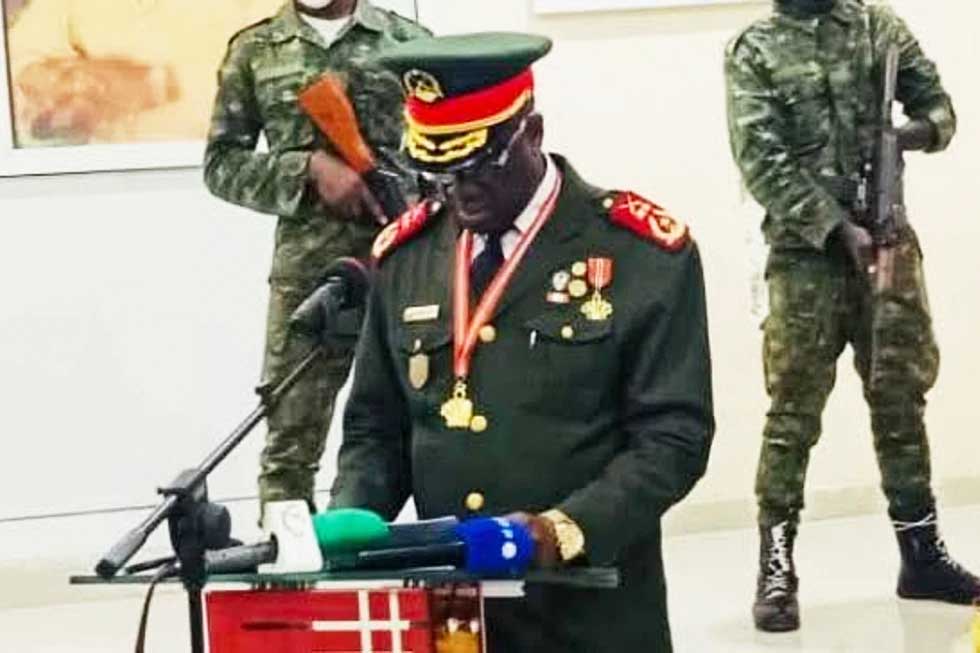
Soldiers in Guinea-Bissau on Thursday announced a new junta leader, cementing a forceful takeover of power that began after this week’s disputed presidential election. The deposed President Umaro Sissoco Embaló has left for neighboring Senegal.
The opposition, meanwhile, claimed that Embaló had “fabricated” the coup to avoid an election defeat in Sunday’s closely contested presidential vote.
The High Military Command on Friday lifted the curfew it imposed during its military takeover and authorized the movement of people and public transportation across all neighborhoods of the capital, Bissau.
Calm has returned has to the capital, with people and vehicles circulating through the city’s streets after army checkpoints were lifted. The main stock exchange and markets in outlying districts, as well as commercial banks, have also reopened.
The coup is the latest in a surge of military takeovers in West Africa, where democracy has been challenged by disputed elections that analysts say could embolden militaries.
ECOWAS said a mediation team, led by the body’s chair and including the presidents of Togo, Cabo Verde, and Senegal, will travel to Bissau to “engage the leaders of the coup with a view to ensuring the full restoration of constitutional order.”
Widely seen as West Africa’s leading political and regional authority, the 15-nation ECOWAS was formed in 1975 to promote economic integration in member states. The bloc often collaborates with members’ governments to solve domestic challenges on various fronts from politics to economics and security.
It has struggled in recent years to reverse coups in the region where citizens have complained of not benefiting from rich natural resources.
Sanctions against junta-led Mali, Niger and Burkina Faso and threats of military intervention in Niger to reverse the coup eventually led to the three countries’ withdrawal from the bloc earlier this year.
Bakary Sambe, who heads the Senegal-based Timbuktu Institute for Peace Studies, said the situation in Guinea-Bissau is still unclear, and any immediate decision by ECOWAS regarding sanctions would seem rushed and counterproductive.
“We are in a state of total uncertainty, caught between an unfinished electoral process and a disruption of constitutional order caused by a coup, which has led to contradictory interpretations and various questions,” he said.
“The regional organization appears to have learned from the mistakes made in Niger and is trying as much as possible to temper its inclination to impose sanctions,” Sambe added.
