



by Curtis Yee, Bernald Mcghee Carley Petesch and Nell Clark
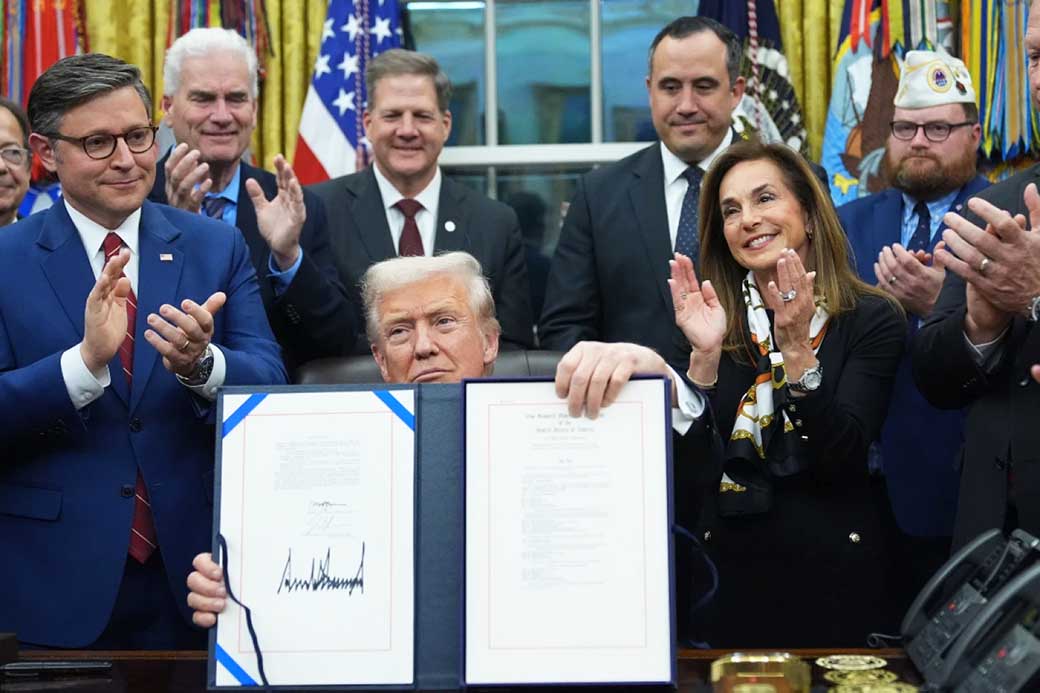
President Donald Trump signed a government funding bill Wednesday night, ending a record 43-day shutdown that caused financial stress for federal workers who went without paychecks, stranded scores of travelersat airports and generated long lines at some food banks.
The signing ceremony came just hours after the House passed the measure on a mostly party-line vote of 222-209. The Senate had already passed the measure Monday.
The shutdown magnified partisan divisions in Washington as Trump took unprecedented unilateral actions — including canceling projects and trying to fire federal workers — to pressure Democrats into relenting on their demands.
Democrats wanted to extend an enhanced tax credit expiring at the end of the year that lowers the cost of health coverage obtained through Affordable Care Act marketplaces. They refused to go along with a short-term spending bill that did not include that priority. But Republicans said that was a separate policy fight to be held at another time.
What else to know about the end of the government shutdown:
- How long will the government be funded?: The compromise funds three annual spending bills and extends the rest of government funding through Jan. 30. Republicans promised to hold a vote by mid-December to extend the health care subsidies, but there is no guarantee of success.
- Federal workers and SNAP benefits: The bill includes a reversal of the firing of federal workers by the Trump administration since the shutdown began. It also protects federal workers against further layoffs through January and guarantees they are paid once the shutdown is over. The bill for the Agriculture Department means people who rely on key food assistance programs will see those benefits funded without threat of interruption through the rest of the budget year.
- Further debates over health care loom: It’s unclear whether the parties will find any common ground on health care before the December vote in the Senate. Johnson has said he will not commit to bringing it up in his chamber. Without the enhanced tax credit, premiums on average will more than double for millions of Americans. Some Republicans have said they are open to extending the COVID-19 pandemic-era tax credits but they also want new limits on who can receive the subsidies.
- An expected Epstein files vote: Democrat Adelita Grijalva was sworn in more than seven weeks after winning a special election in Arizona. Speaker Mike Johnson had refused to seat her until the chamber reconvened. After delivering a floor speech, Grijalva signed a discharge petition to eventually trigger a vote to release files related to Jeffrey Epstein, giving it the needed 218 signatures. Her move will not mean a vote right away, due to House rules.
